Monday, May 22, 2023

Your in-depth guide to battery metals on the ASX

There are nearly 100,000 electric vehicles (EVs) on Australian roads today. That number has more than doubled in 12 months, up from 44,000 at the start of 2022.

Impressive, sure – until we look to Europe, where EV sales overtook diesel vehicles last year like a Tesla cruising past a VW on the Autobahn. 

As governments target transportation to cut emissions and consumers embrace EVs, analyst firms like Bloomberg expect the numbers to keep climbing. 

This is exciting news for Australia’s primary resources industry. Australia is rich in battery metals, including silver, lead, lithium, cobalt, nickel and copper.

In an interview with ABC News, Allison Britt, a Director at Geoscience Australia, said: “If you want to compare an EV battery to cooking, we have all the ingredients to make a delicious cake in our pantry”.

So let’s take a look in the pantry and see how our essential ingredients contribute to the global EV market, and what it means for battery metals on the ASX.  

Thinking of investing in silver mining stocks in 2023? Here’s what you need to know.

Australia’s battery minerals are essential for a green energy future

Batteries of all shapes and sizes need a variety of metals to receive, store and transmit energy, as well as stabilise the chemicals. Most batteries nowadays use lithium-ion technology, from AAAs to EV batteries to the 300-Megawatt Victorian Big Battery.

However, the mix and makeup of the metals change depending on the use case. 

For example, newer solar-powered residential systems tend to use lithium nickel manganese cobalt oxide (NMC) or lithium iron phosphate (LFP) technology to store electricity. The Victorian Big Battery and similar grid-scale batteries also use LFP cathodes.

Tesla developed a new prismatic-type lithium-iron-phosphate cathode, which is still a lithium-ion battery at its core.

And let’s not forget lead-acid batteries. Inexpensive, highly recyclable and reliable, lead-acid batteries are still used in EV’s, solar PV energy storage and many industrial applications.

The bottom line: more batteries means more demand for high-quality battery metals. Australia is fortunate to have many essential battery minerals in our “pantry”.

Lithium

Australia is the largest lithium-producing country outside South America. Production is centred in Western Australia, including the Greenbushes lithium mine, the largest lithium mine in the world.

Lead

Lead-acid batteries are still widely used, including as a backup power source for renewable energy systems. Australia is the world’s third-largest lead producer, with 12.37 million tonnes in reserves as of 2018. Boab Metals (ASX: BML) is moving towards production at Sorby Hills, Australia’s largest undeveloped lead-silver-zinc deposit

Silver

Because of its unbeatable conductivity and high corrosion resistance, silver is an essential battery metal. It is also used in periphery electrical components such as switches and energy transfer. Each battery-powered EV requires 25-50 grams of silver, compared to 15-28 grams for combustion engines and 18-34 grams for hybrids.

Cobalt

The cathode in lithium-ion batteries – the positively-charged electrode that brings in energy from an external circuit – uses cobalt to stabilise the energy transfer. Australia is the world’s third-largest cobalt producer and a leader in sustainable, ethical production. 

Vanadium

Although lithium-ion and lead-acid batteries are the best-known, vanadium redox batteries (VRBs, also called vanadium flow batteries or VFBs) are increasingly common in large-scale energy storage. Despite ranking third in global reserves for this interesting battery mineral, Australian vanadium mines have struggled to get started.

EVs are a big driver for battery metals on the ASX

With 79% of EVs in Australia being battery-powered (the remaining 21% are plug-in hybrids), there is a quickly increasing need for more metals like lithium, silver and cobalt. And that’s only here at home. 

In August 2022, the United States granted Australia preferred status as a supplier for its electric vehicle battery program. That means our battery minerals, including silver, cobalt, copper and lithium, will be critical to sustaining production in the US.

Globally, EVs could make up 60% of new vehicle sales by 2030. The International Energy Agency expects the number of EVs on the road to grow from 16.5 million in 2021 to almost 350 million by the decade’s end.

EV batteries are only one opportunity

Electric vehicles are one of the biggest opportunities for Australia’s mining industry. This is one reason why battery metals on the ASX are popular, representing some of the best stocks to buy now.

But EV batteries are only one part of a global, diverse and ever-expanding technology market. 

Australia’s battery metals turn up in a wide range of applications:

Consumer electronics

A report released in March 2023 estimates demand for smartphones to reach a staggering 1.7 billion units annually by 2030. On top of smartphones, Australia’s battery metals are used in consumer devices from kid’s toys to power tools. 

Industrial equipment

Forklifts, elevators, high-powered tools and mobile machinery all rely on batteries. Many still use lead-acid batteries, with silver used in switches and energy storage. 

Advanced electronics

Whether it’s wearable devices, satellites or submarines, the world’s innovations don’t work without batteries. As a significant player in global production, Australia’s battery metals play a role in powering the future of work, industry, entertainment and communication. 

Why silver’s use in batteries could make it one of the best stocks to buy now

Unlike lithium, silver is not typically associated with battery technology or battery metals on the ASX – yet.

That could all change very soon. 

Silver spot prices are off to a strong start in 2023 and show no signs of slowing. This is partly because silver’s role in a battery-powered future is becoming more widely recognised. It is also because global silver reserves are low, and the world is looking to Australia to stave off a shortage.

The future is bright for battery metals on the ASX. In particular, it is our view that silver represents an exciting investment opportunity in 2023

As we bring Sorby Hills closer to production, we are looking forward to supplying a growing global market with mission-critical battery metals. 

Learn more about Sorby Hills in our investor centre or head to our blog to discover more topics, including the most exciting mining stocks and guides to investing in silver.

The post Your in-depth guide to battery metals on the ASX appeared first on Boab Metals.


source https://boabmetals.com/blog/battery-metals-on-the-asx/

Wednesday, May 17, 2023

Boab Metals (ASX:BML) forges ahead with an action-packed September quarter

Highlights

  • In the September quarter, Boab Metals made continuous progress at its Sorby Hills lead-silver-zinc project
  • Boab has acquired a 178-room accommodation camp at an extremely competitive price
  • Boab has received the amended EPA approval for Early Works at Sorby Hills
  • The company has also completed the tendering process for early works and process plant EPC
  • The company has completed the Phase VI drilling program

Boab Metals Limited (ASX:BML), an ASX-listed, Western Australian-based exploration and development player, has reported an action-packed September 2022 quarter as the company continues to make significant strides toward reaching a decision to mine at its 75%-owned Sorby Hills lead-silver-zinc project.

Additionally, the company has made significant progress on the project by securing an accommodation camp, receiving an amendment to the project’s EPA approval, and completingPhase VI of drilling.


A look at Boab’s September quarter report card

Sorby Hills: Accommodation Camp

Boab has acquired a 178-room accommodation camp, which aligns with the company’s strategy to progress project execution workstreams alongside finalising the definitive feasibility study (DFS). The company believes that this move will de-risk its flagship project.

The company acquired the accommodation camp at a competitive price of AU$1.29 million.

Boab believes the acquisition represents a substantial saving compared to buying a new camp outright or acquiring it via a lease finance arrangement.

The accommodation camp is located about 600 km from Sorby Hills, at the Cosmo Mine Site, and will be transported to the site in Q4 2022. Project employees and contractors will use the camp throughout the construction phase.  

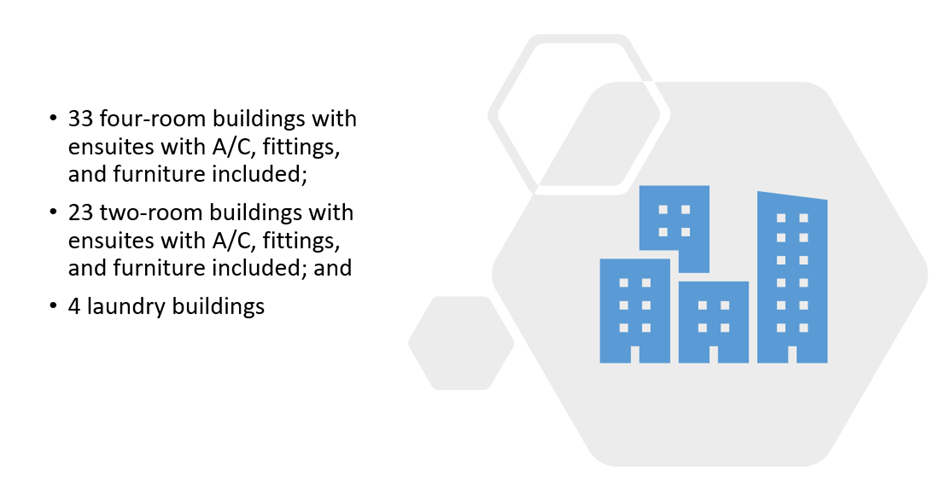
The accommodation camp comprises the following amenities:

Source: © 2022 Kalkine Media®, data source: company update 15 September 2022

Amendment to EPA Approval

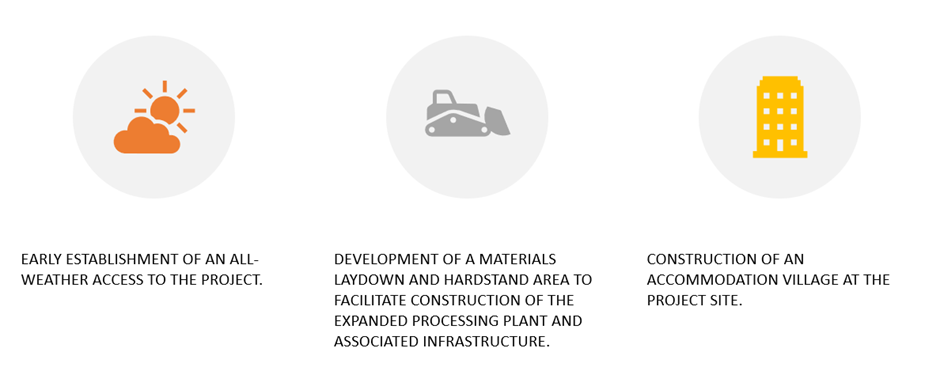
During the September quarter, Boab received the amended EPA approval for Early Works at Sorby Hills. The EPA first approved the development of the project in 2014. The recent amendments were under Section 45C(1) of the Environmental Protection Act, which relates to an increase in the permitted ’development area’. The expansion will allow the following:

Source: © 2022 Kalkine Media®, data source: company update

The approval of the EPA amendment will pave the way for the final clearance of the Biodiversity Conservation Act 2016 and assessing the ‘mining proposal’ associated with Early Works.

The sign-off of the EPA amendment makes it easier for the final go-ahead to be granted under the Biodiversity Conservation Act 2016 and permits the Western Australian Department of Mines, Industry Regulation and Safety to close out its evaluation of the ‘mining proposal’ associated with Early Works.

Completion of competitive tenders

The DFS at Sorby Hills has investigated an expanded process plant capacity compared to 1.5Mpta considered in the pre-feasibility study. The company has received tenders for the EPC contract, incorporating the process plant and non-process infrastructure from several firms. Boab has shortlisted a few firms and is currently refining their submissions before commencing contract formation with the preferred party.

During the period, Boab completed competitive tenders against other key project contracts and received strong proposals for the process plant EPC and Early Works.

Successful completion of drilling program

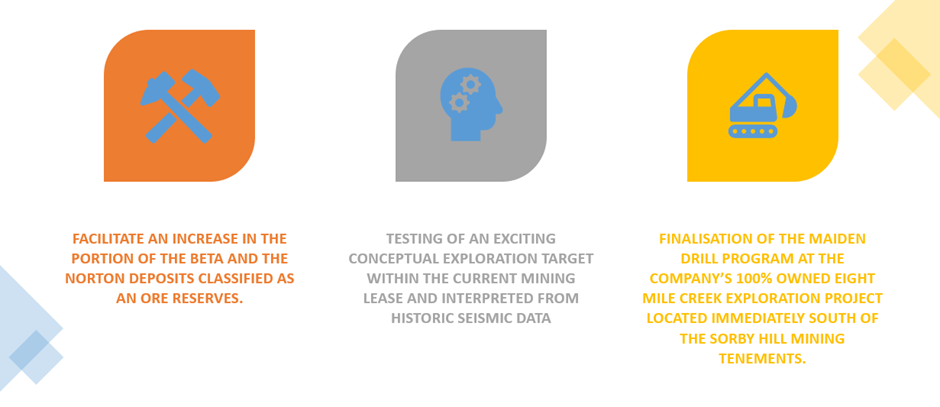
The quarter also saw the successful completion of the Phase VI drilling program comprising 28 reverse circulation drill holes for cumulative drilling of 3,020m. The drilling program was targeted to:

Source: © 2022 Kalkine Media®, data source: company’s update

Boab has also fully executed the Norton and Beta deposit programs, and the company has completed all priority drill holes at the Eight Mile project.

Around 1,700 drill samples have also been submitted to Intertek Laboratories in Darwin for a broad spectrum of element analysis.

Source: © 2022 Kalkine Media®, data source: company update

Financial footing

The company’s consolidated cash balance stood at AU$4.6 million as of 30 September 2022.

Keep up to date with Boab Metals by following them on their Linkedin page here: #Boabmetals

The post Boab Metals (ASX:BML) forges ahead with an action-packed September quarter appeared first on Boab Metals.


source https://boabmetals.com/boab-metals-asxbml-forges-ahead-with-an-action-packed-september-quarter/

Tuesday, April 11, 2023

Why Is The Silver Price Rising In 2023?

What’s driving the silver price surge in 2023?

The silver spot price reached a 12-month high in April 2023, climbing to US$25 (about AU $37.70) per troy ounce for the first time since April 2022. 

Silver prices have been holding up well due to a combination of local and global factors. Some factors are directly related to silver supply, and some seem disconnected until you dig in.

Looking ahead, it’s likely that silver prices will continue to be influenced by a wide range of factors, including:

  • Industrial demand
  • Supply shortages
  • Inflation rates
  • Global economic uncertainty

Some analysts forecast silver’s spot price will stay above the US$25/oz threshold throughout 2023, even reaching US$30, the highest spot price in almost a decade. Others predict a correction, although it’s likely to be small and temporary

Boab Metals (ASX: BML), as a silver mining company on the ASX, is looking forward to a busy year. Our outlook is optimistic based on extensive financial modelling and strong project economics

Here are the big drivers behind silver’s recent price surge. 

Quick note: Commodities markets are unpredictable, and these forecasts should not constitute financial advice. If you’re interested in investing in silver, consult a financial professional before making any decisions.

Silver is a key industrial enabler and an important battery metal

Industrial demand is one of the biggest sustained influences on silver spot prices.

Silver’s unsurpassed conductivity, malleability and stability make it a hot commodity for industrial and technological applications, including:

  • Semiconductors
  • Cabling
  • IoT solutions
  • Medical devices
  • 5G deployment

We are well and truly in the technology age. More devices, connections and cables produced means more silver is required in factories worldwide.

Analysts at Capital.com point out that China’s loosening of COVID-19 restrictions has contributed to rising silver prices. As the world’s largest producer of technology such as chips, circuits and cables, production in China demands lots of silver.

Silver is also crucial to green technologies such as electric vehicle (EV) batteries and solar panels. 

The amount of energy produced from solar panels could double in the next five years, and consumption of silver in the solar industry could grow by 85% to 185 million ounces in a decade.

Alongside solar, the EV market is growing rapidly. Each EV uses 25-50 grams of silver compared to 15-28 grams for combustion-powered vehicles. 

As more countries adopt carbon reduction targets, silver mining companies like Boab Metals will be called on to supply more of the ‘white metal’.

Silver supply is close to deficit levels

Spot prices are, broadly, the result of a supply and demand equation. When supply is tight, prices rise. 

We have already seen deficits in silver supply throughout 2021 and 2022. According to The Silver Institute, this deficit is expected to ease in 2023 as new mining projects come online. 

Last year’s deficit was a record-high 253 million ounces. This year’s projected 199 million ounce gap is smaller, though still significant.

Australia has the largest share of economic silver resources. Our silver will be vital in meeting future demand.

The reality is that global silver reserves are low. There is also no clear replacement for silver in most industrial applications. At current consumption rates, some pessimistic outlooks give us 20-80 years before supply runs out entirely.

We hold a more optimistic position as a silver mining company poised to begin production at Sorby Hills, Australia’s largest undeveloped silver-lead-zinc deposit. Silver is also highly recyclable, which will help to offset dwindling supplies over the next century.

Interest rates and inflationary pressure

Inflation rates remain high, which has historically been good for silver prices. This is because silver is used as a hedge against inflation; people invest in silver with a view to its value increasing more than currency.

However, inflation rates are expected to ease through 2023, especially in the US. This could lead to a stronger US Dollar (USD). Because the silver spot price is quoted in USD, a stronger Dollar means less purchasing power for prospective silver investors.

Investors and traders will be keeping a close eye on inflation outlooks. It is hard to predict inflation and interest rate movements, just like precious metal prices. For that reason, outlooks are mixed, with the general consensus being “wait and see”.

Investor sentiment is maturing

As ForexLive points out, silver is used six times more often than gold in industrial applications. This is creating interest among investors, which in turn encourages more information to be published and shared. 

(However, it remains to be seen whether this leads to a ‘decoupling’ of historically-held views that gold and silver prices are tied.)

There are many ways to invest in silver. The spot price is in the spotlight right now, but what does it mean for people wanting to invest in silver?

Some investors do buy physical silver. They purchase silver bullion or coins, which they hold until price rises or they need liquidity. Silver has historically been favoured as a hedge (safeguard) against inflation, as it can be more stable than currency over long periods.

Other investors put their money in exchange-traded funds (ETFs). ETFs manage investments intending to generate above-average returns, which is especially attractive during economic uncertainty. 

Silver ETFs might hold currency – such as bullion and coins – or invest in silver mining companies. 

Alternatively, confident investors might strike out alone and invest in silver mining companies on the ASX. This requires a good deal of research. But if you back the right small-cap mining stock, the potential upside can be significant.

There is no universal “best way to invest in silver”. Each investor should consider their risk appetite and financial goals, and seek advice from a financial adviser. 

Is 2023 the time to invest in silver?

The answer to this million-dollar question depends on which analysis you read. Commodity prices are hard to predict. There are too many complex intertwined factors at work, as well as the influence of investor sentiment.

If you are considering investing in silver, we have some helpful resources to help you understand the landscape and make an informed decision. We encourage you to visit our investor section to learn more about Boab Metals and the Sorby Hills Project.

The post Why Is The Silver Price Rising In 2023? appeared first on Boab Metals.


source https://boabmetals.com/blog/why-silver-price-rising-2023/

Tuesday, March 14, 2023

Why Is Silver Found With Lead And Zinc?

Why are lead, silver and zinc found together in mineral deposits?

It’s extremely rare to find a deposit comprising just one metal. That goes double for precious metals like silver, gold and platinum.

So, although many mining companies focus on extracting one or two valuable metals, the reality is their deposit will contain an array of complimentary minerals.

Why is that? And why do many silver mining companies also produce lead and zinc?

To understand why today’s mining companies have a diverse portfolio of precious and industrial metals, we need to travel millions of years into the past.

Why silver is found with zinc and lead?

A quick rundown of carbonate-hosted lead-zinc deposits

It’s common to find silver, lead and zinc together in sulphides such as galena (PbS, lead sulphide) and argentite (Ag2S). In Australia, and Sorby Hills in particular, these deposits have formed in carbonate rocks like limestone. 

Carbonate-hosted deposits formed when salt and metal rich, hot ground waters flowed through carbonate rocks. The liquid reacted with the carbonate rocks and cooled, precipitating minerals like galena and sphalerite (ZnS, zinc sulphide).

Silver can be present in these deposits because the silver and lead sulphide minerals form under the same geological conditions. As the fluid passed through the rocks some 300-400 million years ago, the metals co-precipitated as sulphide minerals, forming lead rich galena with significant inclusions of silver rich minerals like argentite.

Why this matters for investing in silver?

Native silver is scarce. Most of the world’s silver supply comes from ore that contains low percentages of the precious metal.

For example, Sorby Hills, Australia’s largest undeveloped silver-lead-zinc deposit, contains an estimated 35 grams of silver per ton of ore. That’s around 53,000,000 ounces. 

Understanding the sources of silver explains why anyone considering an investment in an ASX-listed silver mining company should also pay attention to lead prices. Although the two metal prices move independently, long-term trends and market outlooks can inform your decision to invest in silver and lead mining stocks.

Sorby Hills mineralisation

Recent high-grade assay results at Sorby Hills have further confirmed the deposit has very substantial silver.

The primary mineralisation is rich in silver and lead, with moderate to high pyrite (FeS2, iron disulphide) content and low sphalerite. There are massive lenses of galena occurring in the areas containing clay, becoming more abundant below the lead mineralisation. 

Getting silver out of galena

Lead and silver also have similar extraction and processing methods. That’s good news as we move towards production at Sorby Hills. 

Once we extract and process the ore on-site, at least 25% of the concentrate produced will travel to the headquarters of our joint venture partners, Henan Yuguang Gold and Lead Co., Ltd. There, the ore will undergo a smelting process that’s been gradually improved since the first smelters fired up around 4,000 years ago.

Ultimately, we’re targeting 82% silver recovery and 95% payability. With the global silver market tipped to grow in the coming years, we believe those targets make Boab Metals (ASX: BML) one of the most exciting silver mining stocks on the ASX.

Dig deeper into lead-zinc deposits

If you’re interested to learn more about the mineralogy at Sorby Hills, you can find the information in the Projects section of our website. We also presented the results from our Definitive Feasibility Study in early 2023. You’ll find that data in the Investor section, along with loads of helpful information for investing in Boab Metals.

The post Why Is Silver Found With Lead And Zinc? appeared first on Boab Metals.


source https://boabmetals.com/blog/why-silver-found-with-lead-zinc/

Monday, March 13, 2023

Boab Metals (ASX:BML) commences Front End Engineering & Design (FEED) work at Sorby Hills Lead-Silver-Zinc Project – Kalkine Media

Highlights


  • Boab Metals (ASX: BML) has moved ahead to the next stage of project engineering and design at its Sorby Hills Project.
  • GR Engineering Services has begun the Front End Engineering & Design (FEED) work for the process plant and related infrastructure at the project.
  • Engineering Services Agreement (ESA) has been executed with GRES to conduct FEED for Sorby Hills with the work likely to conclude in the third quarter of the ongoing year 2023.
  • Commissioning of the process plant and first concentrate production is expected in early 2025.

ASX-listed exploration and development player Boab Metals Limited (ASX: BML) today revealed that GR Engineering Services (GRES) has initiated Front End Engineering & Design (FEED) for the process plant and related infrastructure at its Sorby Hills Project. Based in the Kimberley Region of Western Australia, the Sorby Hills Lead-Silver-Zinc Project is the flagship project of the ASX-listed firm.

BML shares jump 2.5%

BML shares were spotted trading 2.5% higher on 13 March 2023 post the announcement. The share price was noted at AU$0.205 during morning hours with market capitalisation of AU$34.89 million.

Details of BM-GRES agreement

The Engineering Services Agreement executed with GRES includes provision for the tender as well as early procurement of long lead items. The company expects the associated work to conclude by the third quarter of the year 2023 (Q3 2023).

Upon completion of work under ESA, GRES and BML are planning to sign an EPC contract and start full detailed design; however, this remains subject to a Final Investment Decision (FID) on the Project.

First concentrate production likely in early 2025

As per a preliminary construction schedule drafted by GRES, the long lead procurement and offsite fabrication is expected to kick off upon EPC award and FID in Q3 2023. The process plant construction team will be mobilised to the project location in April 2024.

The earthworks associated with footprint preparations for the Sorby Hills process plant and associated infrastructure have got EPA approval. It is likely to complete ahead of the 2023 wet season.

The commissioning of the Process Plant and the first concentrate production is expected in early 2025.

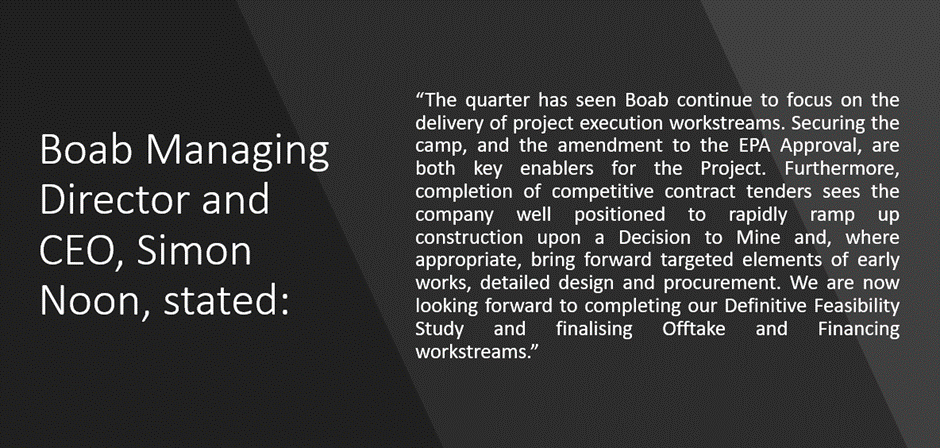
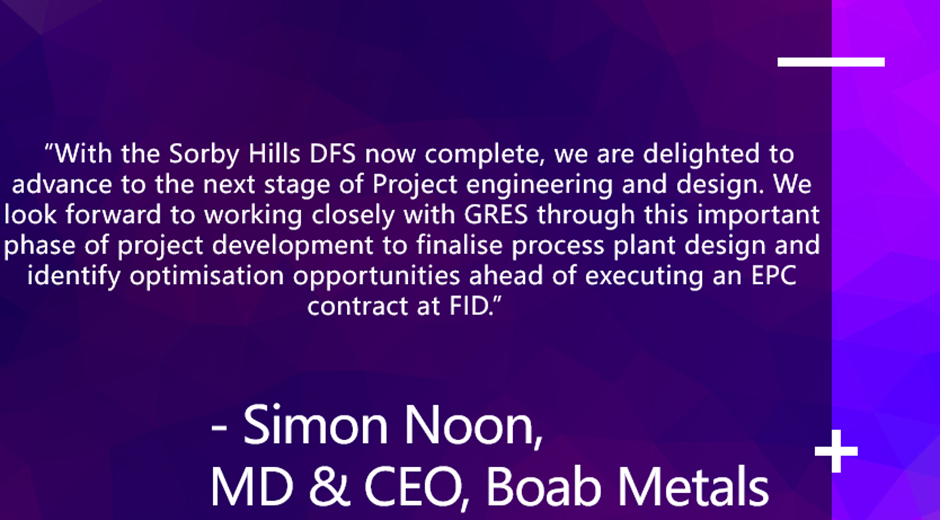
This is what Simon Noon MD & CEO has to say about the latest development

Data source: Company update

Read Sorby Hills DFS in detail here


Kalkine Media®


The post Boab Metals (ASX:BML) commences Front End Engineering & Design (FEED) work at Sorby Hills Lead-Silver-Zinc Project – Kalkine Media appeared first on Boab Metals.


source https://boabmetals.com/blog/boab-metals-asxbml-commences-front-end-engineering-design-feed-work-at-sorby-hills-lead-silver-zinc-project-kalkine-media/

Thursday, March 9, 2023

Are you ready for the 2023 Boab Metals Ord Valley Muster?

The Kimberley’s’ best performers are perfecting their acts, local chefs are taste-testing seasonal produce, dancers are stretching, bands are practising, and the chatter in Kununurra is getting exciting.

It’s all building to the biggest cultural event in the Kimberley, the 2023 Boab Metals Ord Valley Muster

Billed as “The Ultimate Kimberley Festival”, the Boab Metals Ord Valley Muster is a 10-day celebration of everything that makes our region special. Music, dance, culture, food and sightseeing combine against the stunning East Kimberley backdrop.

May and the Muster can’t come soon enough. Here’s a taste of what you can expect this year when the multi-award-winning Boab Metals Ord Valley Muster kicks off.

Challenge the Gibb

One week, 700+ kilometres. 350 participants, all trying to raise an impressive $1 million for the Royal Flying Doctor Service. A whole week before the Muster kicks off, teams of cyclists will test their mettle in the Gibb Challenge

It’s technically a social event. But you can bet there will be some friendly competition as these adventure junkies trace the Gibb River Road from Derby to Kununurra. 

Corroboree under the stars

The Miriuwung Gajerrong people have called the Kimberley home since long before it was called the Kimberley. “Kununurra” is considered by some people to be anglicised from “Goonoonoorrang”, the Miriuwung word for the Ord River.

In an extraordinary showcase of Aboriginal culture, art and tradition, the Waringarri Aboriginal Arts Centre is hosting a Corroboree Under the Stars on Monday 22 May. This unique experience is always a favourite with attendees, and tickets include traditional bush tucker plus a guaranteed good time.

Get your tickets here.

Music that’ll reach the moon

With performances from King Stingray, Birds of Tokyo, Toni Childs and more, the Aviair HeliSpirit Kimberley Moon Experience promises to be unforgettable.

A pinnacle in the Boab Metals Ord Valley Muster program, the Kimberley Moon Experience will see Celebrity Tree Park packed with families and friends for a night under the stars. Pack a picnic rug and dancing shoes, or upgrade your ticket to attend the black-tie Kimberley Fine Diamonds Dinner.

Tickets are available here.

Mouth-watering local flavours

Blak Tapas, in partnership with Waringarri Arts, brings bush flavours to life over two delectable nights under the Kimberley stars. After a traditional welcome performed by Miriuwung elders, you’ll taste delicious canapes made with locally-grown produce and infused with local flavours.

Throughout the meal, you’ll also learn the long history of Miriuwung food and experience a didgeridoo performance at a Dreaming site, all backdropped by a stunning sunset.

Art, Cuisine and Culture takes place on Wednesday 24 and Thursday 25 May.

How a-boat some yoga?

Yoga Boats has to be one of the most unique events in the 2023 Boab Metals Ord Valley Muster program. 

On Saturday, Sunday, Tuesday and Wednesday during the festival (May 20, 21, 23 and 24, respectively), you can putter around Packsaddle Lagoon and experience an enlightening yoga class at the same time. 

After class, Kununurra Cruises will transport you across Lake Kununurra while you enjoy a healthy (and well-earned) breakfast aboard.

See the yoga boats schedule and book tickets here.

See the full program

The Boab Metals Ord Valley Muster is sure to be the main event in the Kimberley cultural calendar. Don’t miss a minute of the magic; see the full program here, explore exclusive travel packages or find your accommodation before it all books out. 

Boab Metals is proud to be the naming rights sponsor of the Boab Metals Ord Valley Muster, a unique celebration of Kimberley culture in the stunning surrounds of Kununurra

The post Are you ready for the 2023 Boab Metals Ord Valley Muster? appeared first on Boab Metals.


source https://boabmetals.com/blog/are-you-ready-for-the-2023-boab-metals-ord-valley-muster/

Tuesday, February 7, 2023

What Influences Silver Prices In Australia?

A useful guide for those looking to invest in silver

Almost every commodity on earth adheres to a relatively simple rule: supply and demand determine price. Shortages (when demand outpaces supply) drive prices up, while surpluses bring them down.

Silver is no exception. Of course, there’s a lot of nuance and speculation involved in determining silver prices in Australia. Investing is hardly black and white.

So if you’re considering investing in silver, it’s essential to know what can affect the price. This guide to investing in silver is designed to give you a head start on what might be one of the best investments in 2023. 

First things first, though. What “price” of silver are we talking about?

The three different silver prices in Australia and why they matter

  1. Spot price
    Most of the time, when anyone refers to the price of silver, they’re referring to the spot price. This is the current price for immediate silver purchases. It’s quoted in USD and fluctuates throughout the day depending on factors we’ll discuss shortly.
    The remainder of this guide will refer to the spot price of silver unless otherwise stated. 
  2. Futures price
    Buying silver futures is like betting on the future price of the precious metal. Essentially, investors lock in a price today for silver they’ll receive in the future. If the price rises, they’ve made a good investment. 
  3. Share price
    This one is a little more complicated. Silver itself isn’t listed on the ASX, but silver mining companies and ETFs are. Buying ASX silver stocks involves more considerations than the price of silver in Australia. You’re investing in a company, not a commodity – due diligence is essential.

The ‘big 3’ influences on silver prices in Australia

1. Supply and demand

Not surprisingly, supply and demand forces are the biggest influence on silver prices. The price typically rises when demand exceeds supply and falls when the balance tips the other way.

However, supply and demand interactions are complex. They play out on local, international, and global scales. For example, Boab Metals (ASX: BML) is nearing production on Australia’s largest undeveloped silver-lead deposit at Sorby Hills. Our reserves could theoretically swell global supply, easing price pressure. 

But against a backdrop of increasing silver demand worldwide, rising inflation, and the rate we plan to extract ore, our contribution won’t tip the scales towards a surplus.

On top of that, unforeseen factors can all affect the price of silver in Australia:

  • Local and global economic stability
  • Mining disruptions
  • Industrial demand spikes 
  • Geopolitical events
  • Emerging industrial uses

For a final twist, the silver market is smaller than gold. If a single large investor believes silver will be the best investment in 2023, prices could feasibly rise. 

2. Global economy

According to Geoscience Australia, we have “the largest share of the world’s economic silver resources, outstripping Mexico, Canada and the USA”. In 2021, Australia tied with Poland and Russia as the world’s fifth-largest silver-producing country.

Domestic production is stable. That makes ASX silver stocks an attractive investment. However, a global outlook is essential when investing in silver. International events can and do impact silver prices in Australia.

  • Silver is used as an inflation hedge in periods of economic uncertainty, such as a pandemic or when international conflicts are simmering
  • Most of Australia’s silver is exported for refining and production
  • Increased production of solar panels, EVs and circuit boards will demand more silver
  • Foreign exchange rates (especially AUD-USD) can impact silver prices in Australia

We expect global forces like the renewable energy market and increasing reliance on technology to steadily increase silver demand. At the same time, these could decouple silver prices in Australia from traditional influences, flattening the fluctuations provided we maintain production levels.

3. Sentiment

Silver prices have fluctuated over time, often with greater volatility than gold. Speculation plays a pretty significant role in those movements. Positive sentiment among investors, caused by economic stability or expectations of future demand, can push spot and futures prices higher. Negative sentiment can do the opposite. 

Sentiment is tied to a broad array of factors, including:

Silver valuations in the last centuries tended to be wide-ranging, creating volatility in spot prices. However, globalisation and “technologisation” are changing all that. Silver’s use in industrial applications and consumer products is expected to standardise the playing field somewhat.

Like all precious metals, silver will still be used as an inflation hedge and currency. Public sentiment will still be a factor. Whether it has the same influence as bygone eras remains to be seen.

What does the future hold for silver prices in Australia?

Silver has played two roles for the last ~6,000 years, both as a currency and versatile industrial metal. It seems like the future will have more of the same in store for silver.

Kind of.

Silver will continue to be used as a currency store, in particular to insulate investors against nasty inflation cycles. And the “white metal” is expected to show up in more – and growing – sectors, especially renewable energy, battery-powered vehicles, and electronics. 

All signs point to silver prices stabilising as demand steadily increases in the coming years. Both in Australia and worldwide, silver producers are likely to focus on the expanding renewables energy sector (including the EV market), with limited leftover stock for silver bullion.

What does this mean for Boab Metals?

Silver miners tend to look long-term. Spot and futures prices are more relevant for day traders, investors and currency exchanges. 

We aim to extract silver and lead for industrial uses, insulating the BML share price from short-term fluctuations. In addition, we expect to ink offtake agreements that will create stability and reinforce investor confidence.

That said, we’re keeping a close eye on silver prices in Australia and worldwide. We hope to watch them rise steadily in the coming years as increasing industrial demand generates positive sentiment.

As a small-cap mining stock with a bright future, Boab Metals is ambitious and optimistic. Visit our investor centre or read our blog to learn more about investing in silver.

The post What Influences Silver Prices In Australia? appeared first on Boab Metals.


source https://boabmetals.com/blog/silver-prices-australia-influences/

Your in-depth guide to battery metals on the ASX

There are nearly 100,000 electric vehicles (EVs) on Australian roads today. That number has more than doubled in 12 months, up from 44,000...